Sample preparation tools for cross-sectional observation
ーC technique jig and S technique jigー
Produce high-quality, damage-free samples while significantly reducing ion milling processing time.
Ideal for:
HOW TO USE
Preparation of high-quality samples
for cross-sectional observation
You can obtain high-quality samples with minimal damage
through a two-step process of pre-cutting and final finishing,
using two jigs developed by Nogamigiken.
― Process 1: Pre-cutting ―
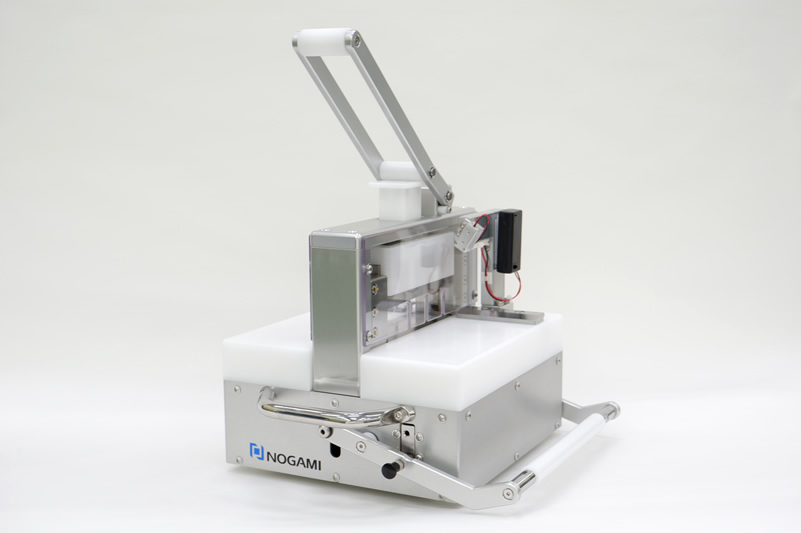
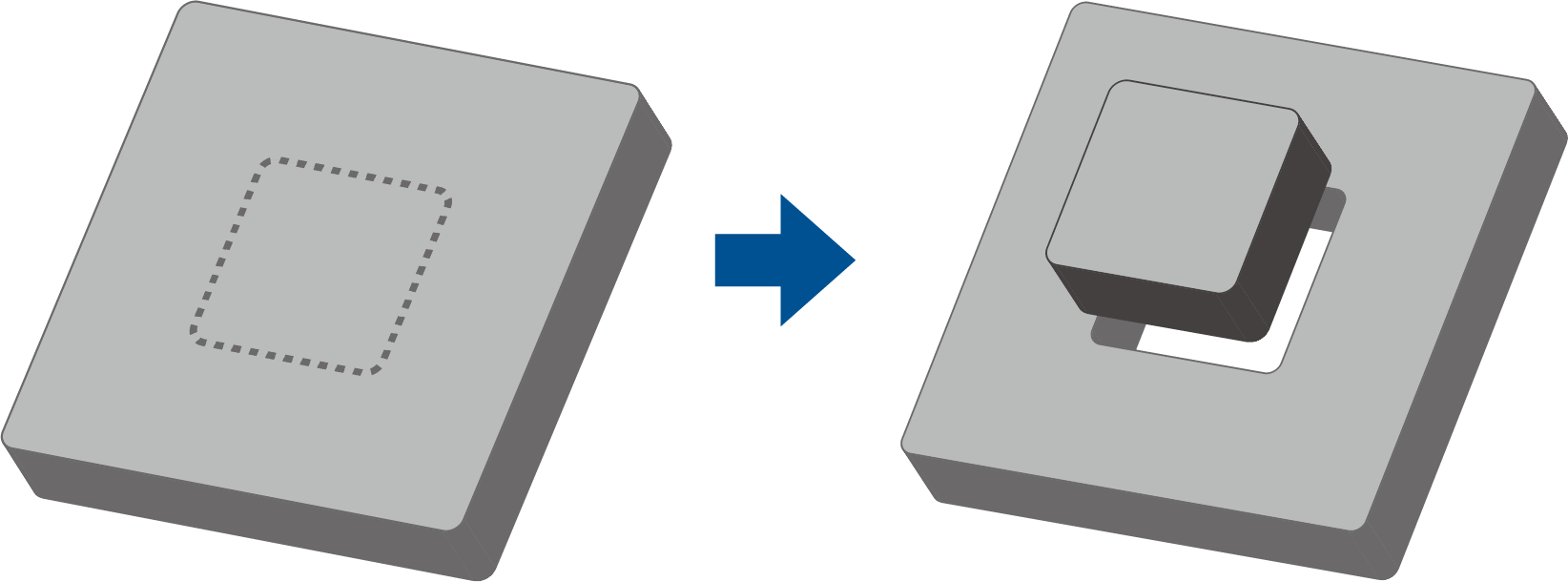
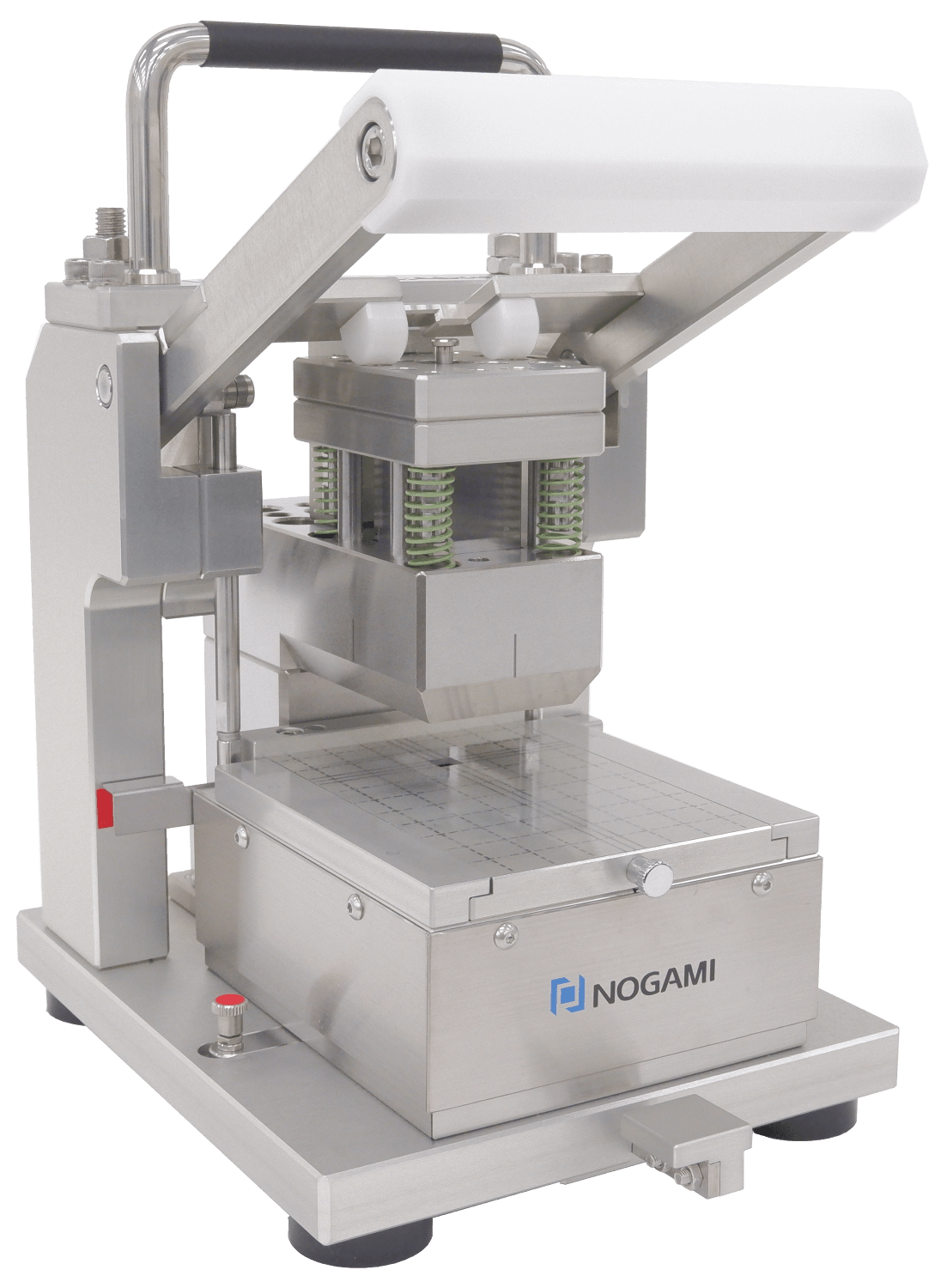
Punching jig for cross-sectional observation samples
―C technique jig
Capable of punching highly brittle materials prone to cracking without causing fracture
Enabled by a proprietary technique developed by Nogamigiken, even materials that will typically shatter under conventional punching can be processed and retrieved without destruction.
― Process 2: Cut surface finishing ―
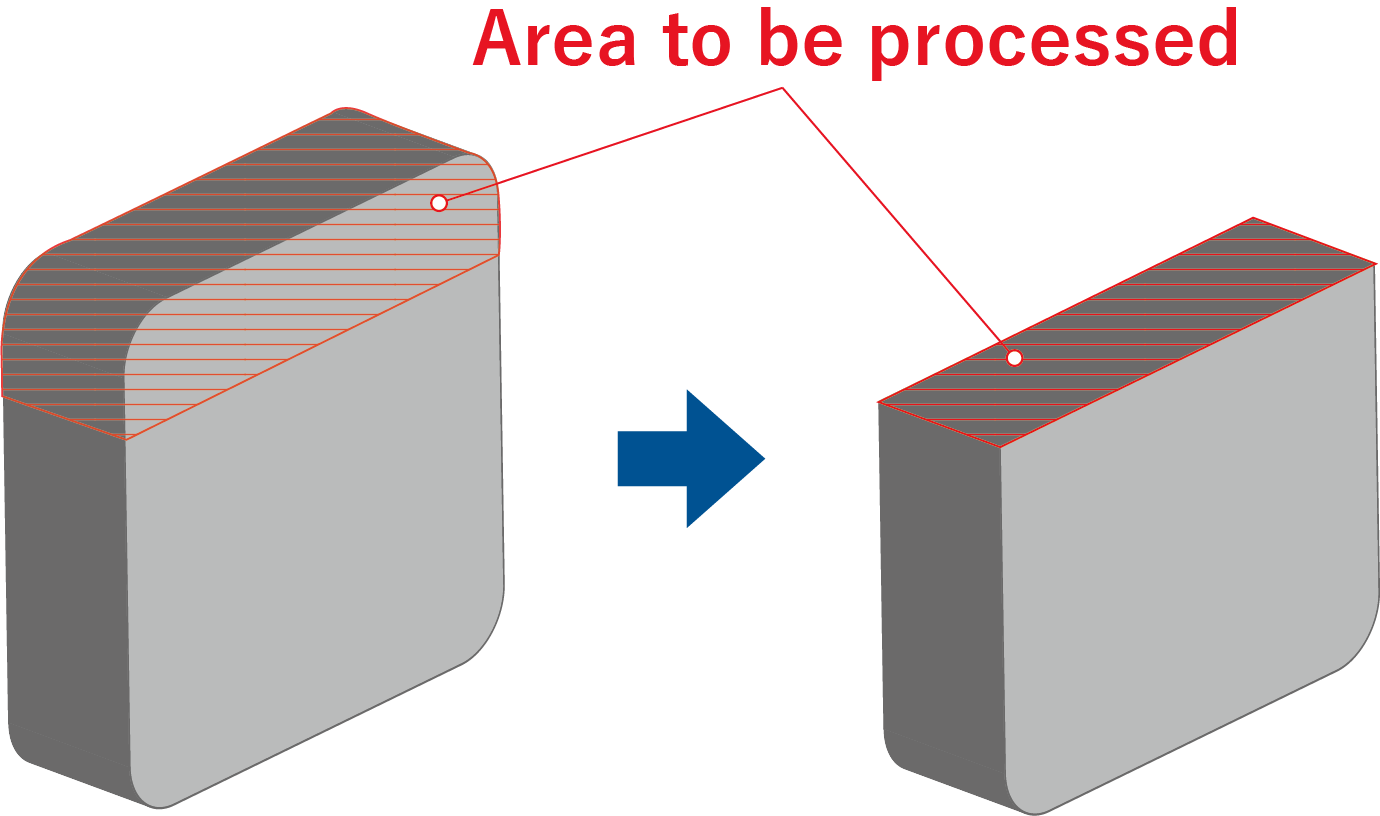
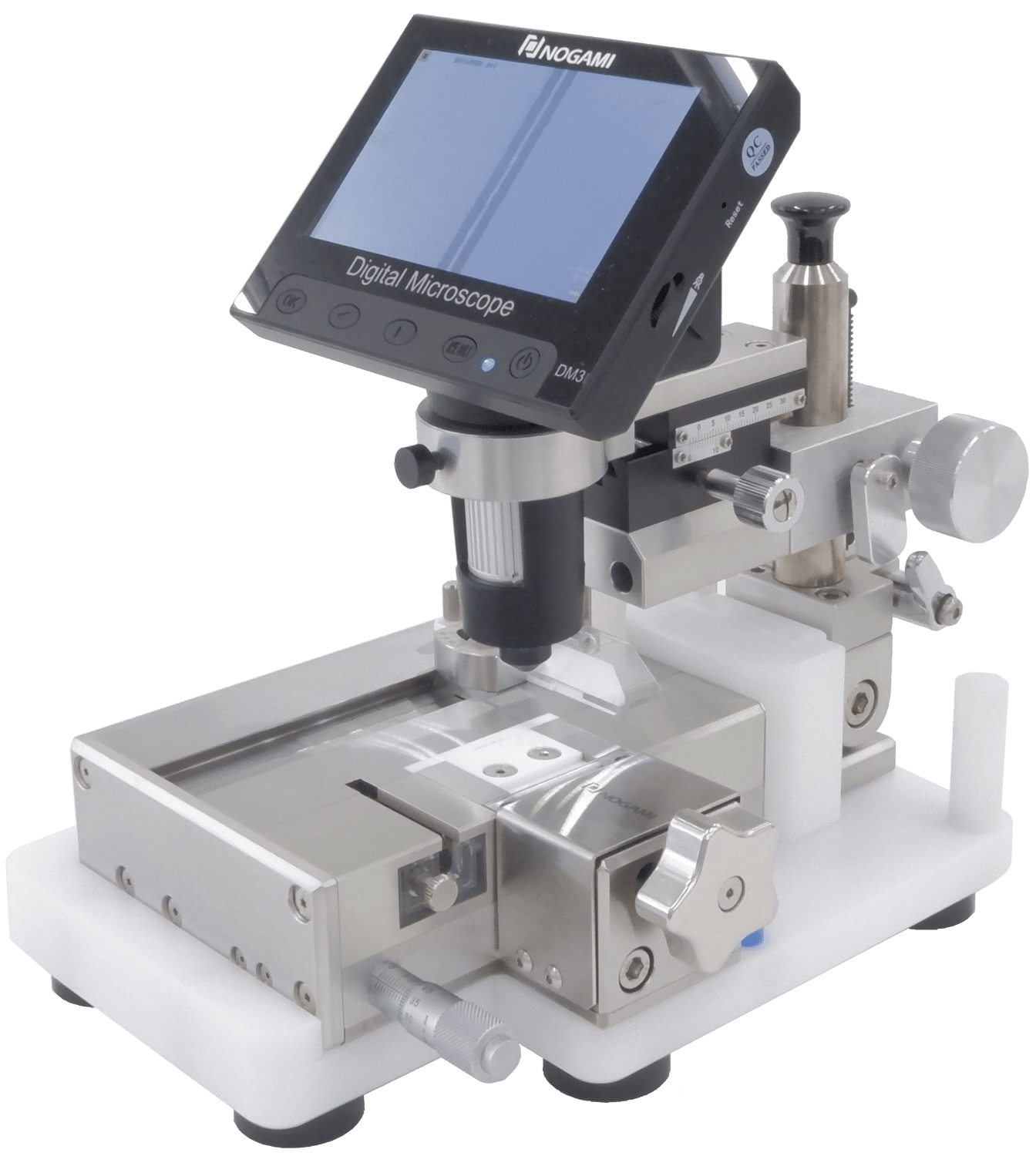
Cut surface finishing jig for cross sectional observation samples
―S technique jig
Processing with minimal damage achieved through a proprietary technique
Processing can be performed with virtually no damage, without applying stress in the thickness direction of the material. Smooth, high-quality cross sections can be obtained with no interlayer delamination, cracking, or collapse/material loss.
RESULT
Key benefits of using two jigs
You can obtain high-quality samples with minimal damage.

Nogamigiken’s proprietary processing technology minimizes stress on the sample during processing to the greatest extent possible, enabling the production of high-quality samples.
You can reduce ion milling processing time drastically.
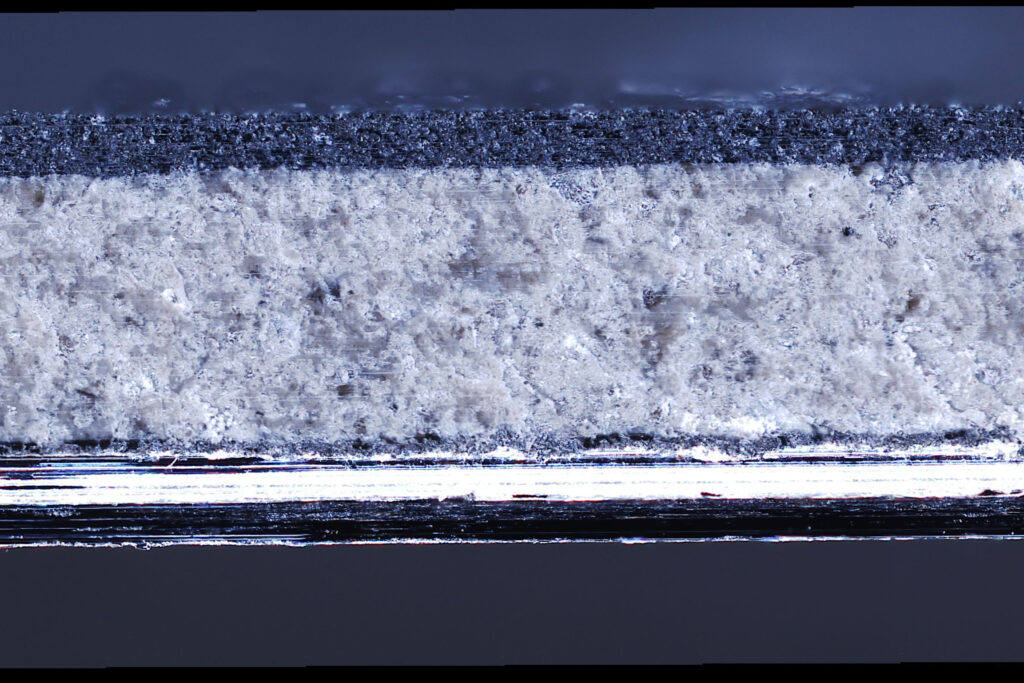
Along with cost reduction, the reliability of observation results is significantly enhanced. Thanks to the smooth cross-sectional finish achieved by the S technique Jig, even all-solid-state batteries can be processed by ion milling with high precision and in a significantly shorter time.
They make operations inside the glove box easier while also reducing overall processing time.
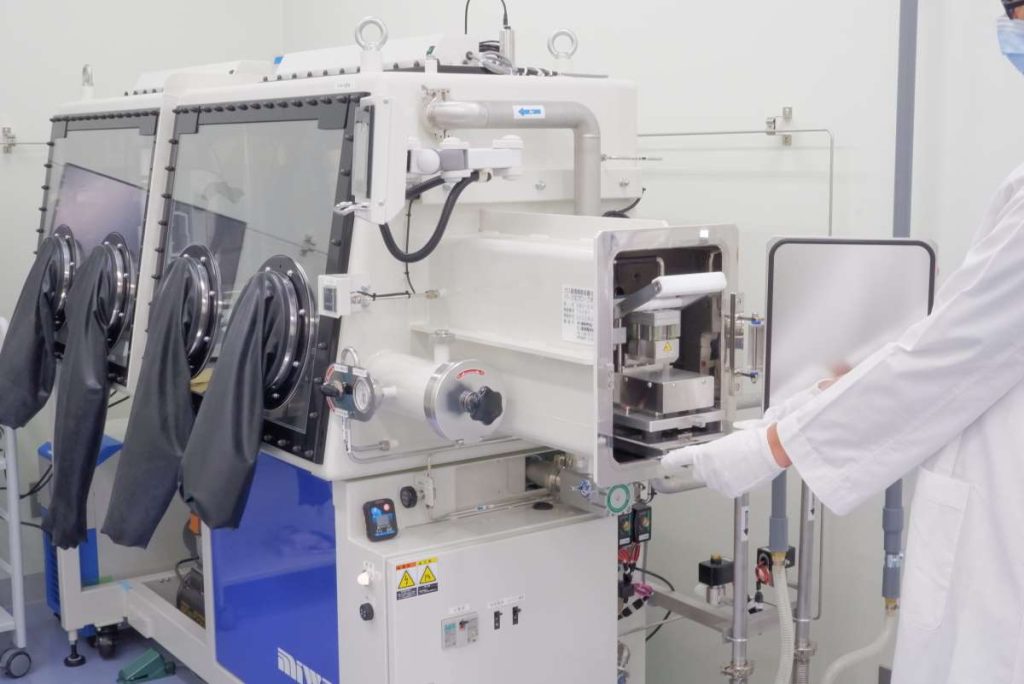
Designed specifically for glove box applications, these lightweight and compact jigs are easy to handle even in limited workspace and can be conveniently transferred through the antechamber.
Customer Testimonials
PRODUCTS
Product details
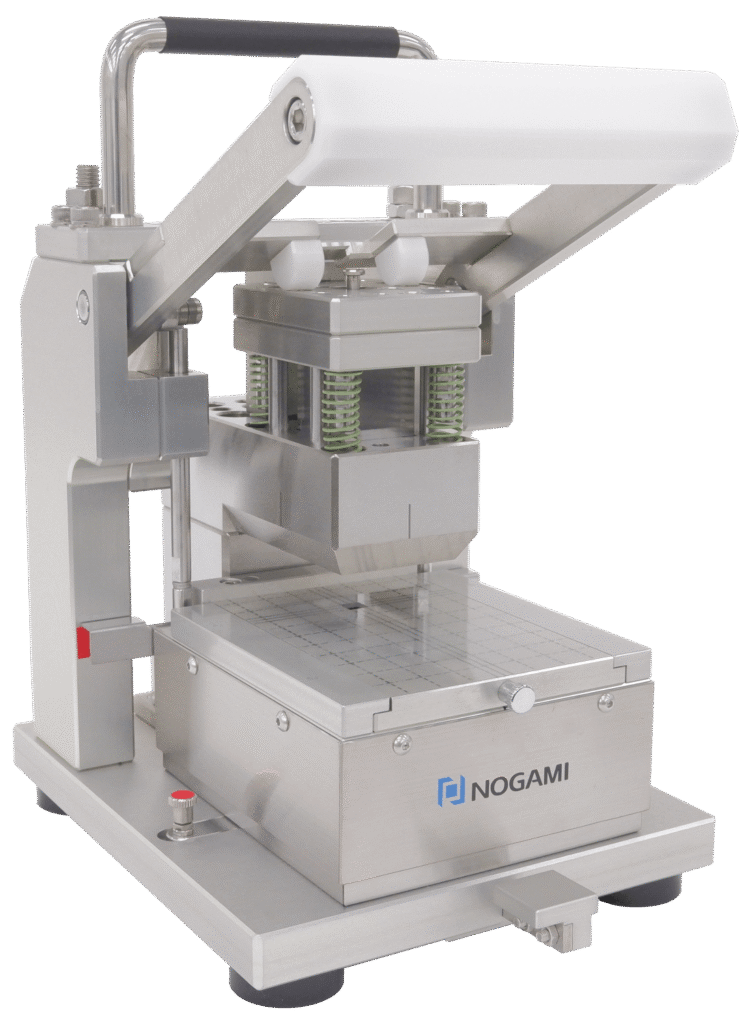
Punching jig for cross-sectional
observation samples
―C technique jig―
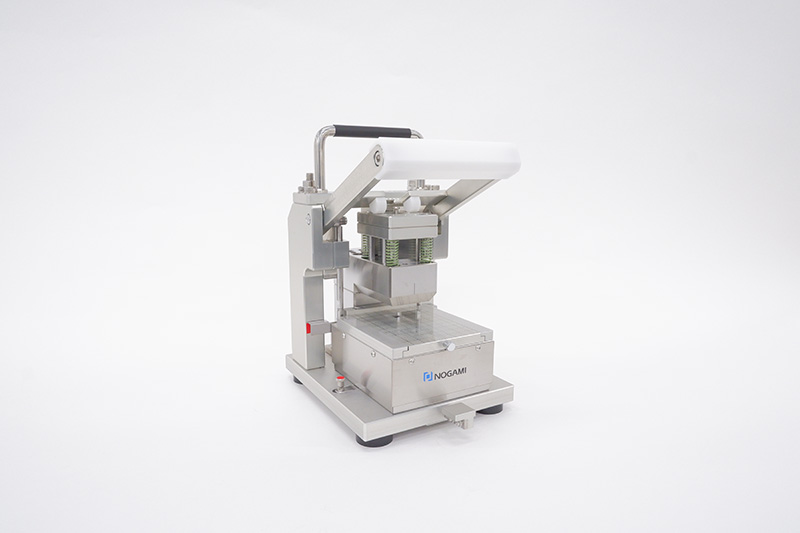
This tool is designed to punch out samples for advanced material characterization and analysis, including Scanning Electron Microscopy (SEM). Utilizing Nogamigiken’s proprietary processing method and jig mechanism that minimize material damage based on the principle of shearing, it significantly reduces damage to sample edges. As a result, even hard and brittle materials can be processed without cracking, chipping, or interlayer delamination.
Key features of the C technique jig
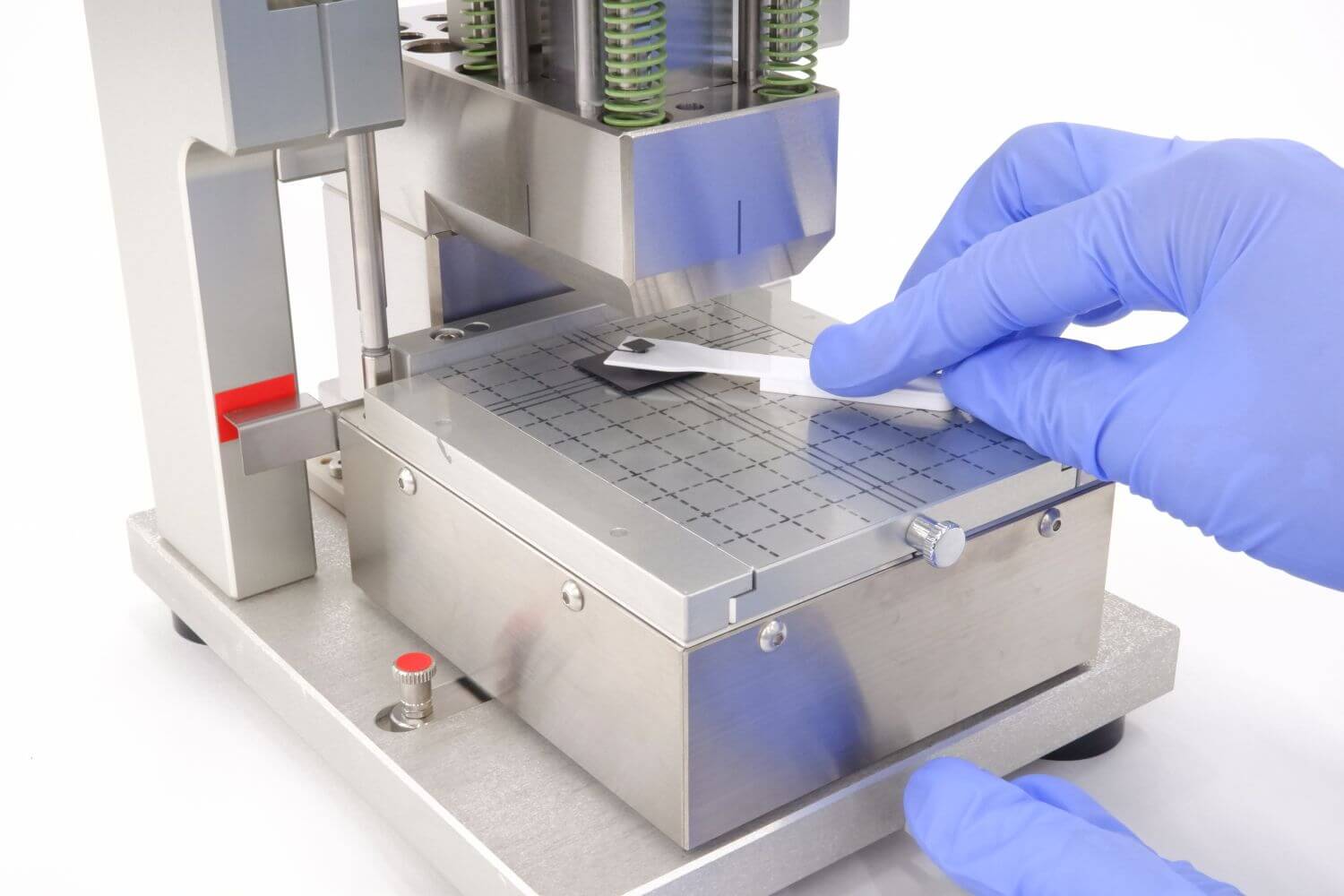
Capable of processing highly brittle materials prone to cracking without causing fracture
Enabled by a proprietary technique, even materials that will typically shatter under conventional punching can be processed and retrieved without destruction.
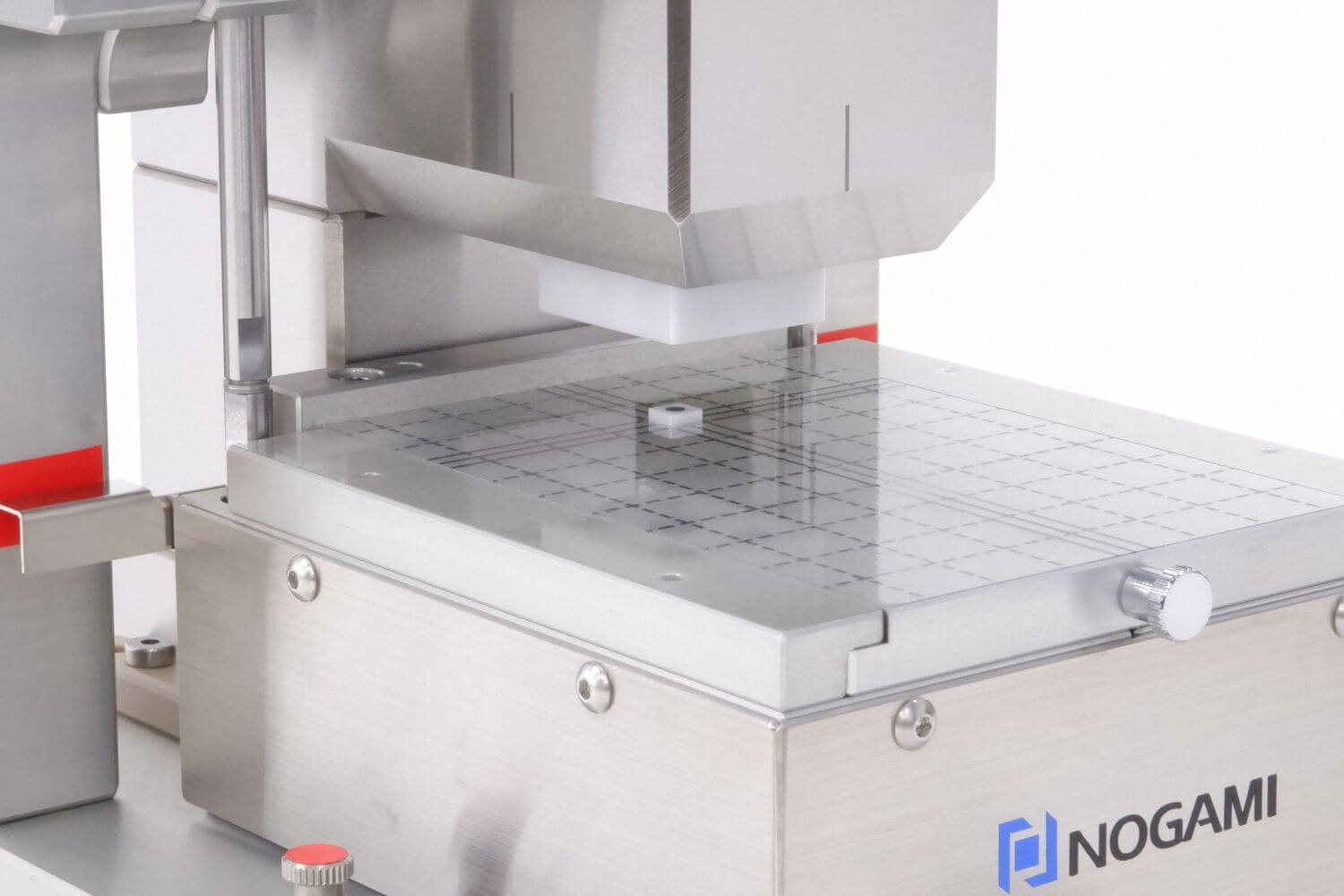
Choice of blade materials to suit your application
The blades are available in two material options: coated cemented carbide and ceramic. For the processing of charged batteries, we recommend the ceramic blade, which helps prevent short circuits.
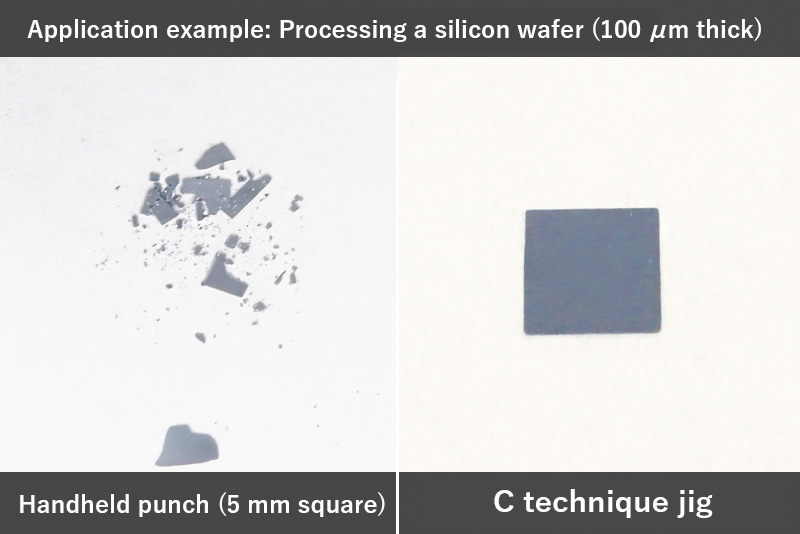
All four sides can be processed simultaneously with high precision in a single press operation.
Simple, user-friendly operation allows anyone to accurately punch and prepare samples without damaging the material.
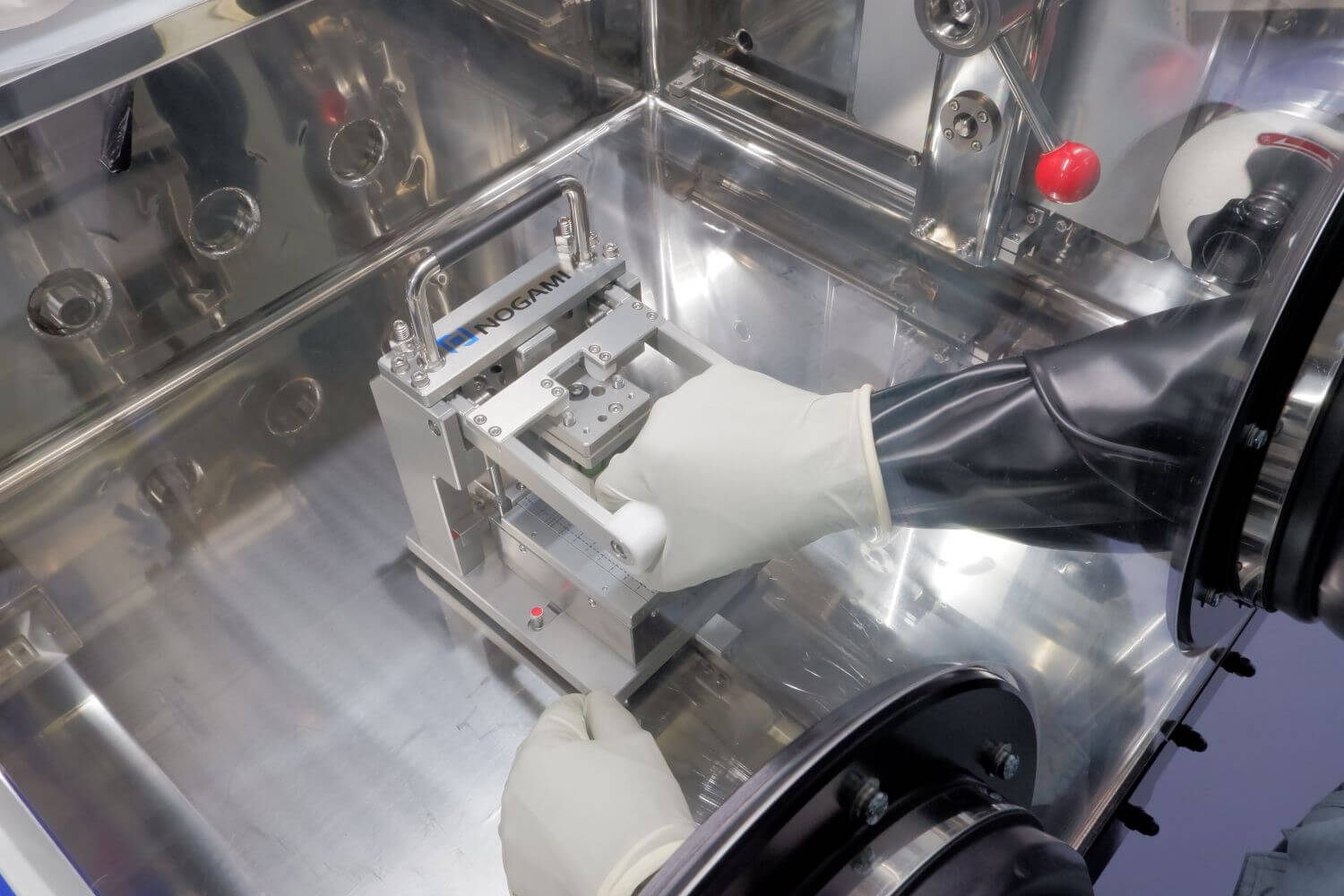
Safe to use inside a glove box with excellent operability
Simply lower the lever to perform the operation, making work inside a glove box quick and easy. Furthermore, because your hands never touch the blade, there is no need to worry about damaging your gloves.
Application examples
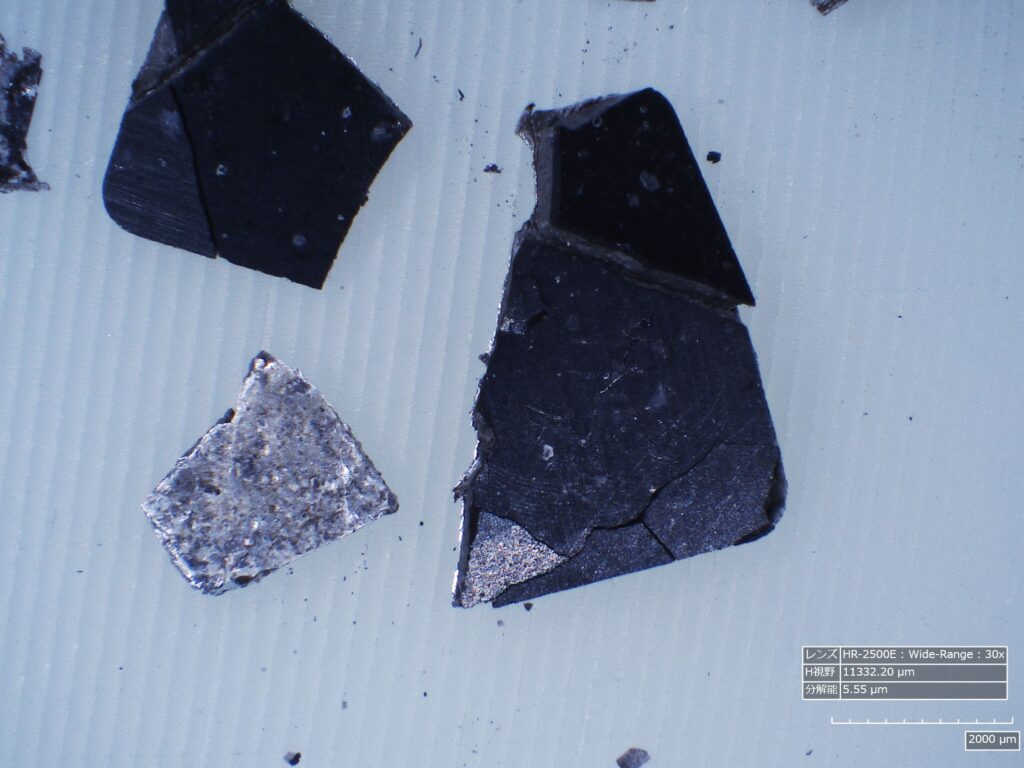
All-solid-state battery processed with the handheld punch 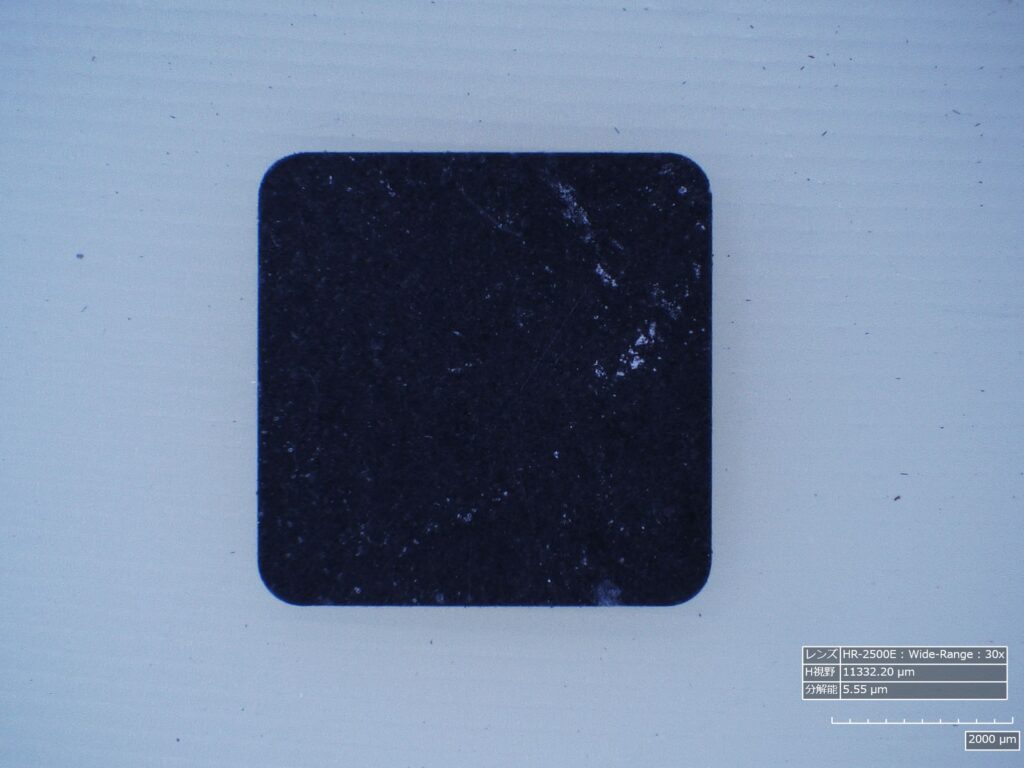
All-solid-state battery processed with the C technique jig (Photo showing the cathode NCM Surface) 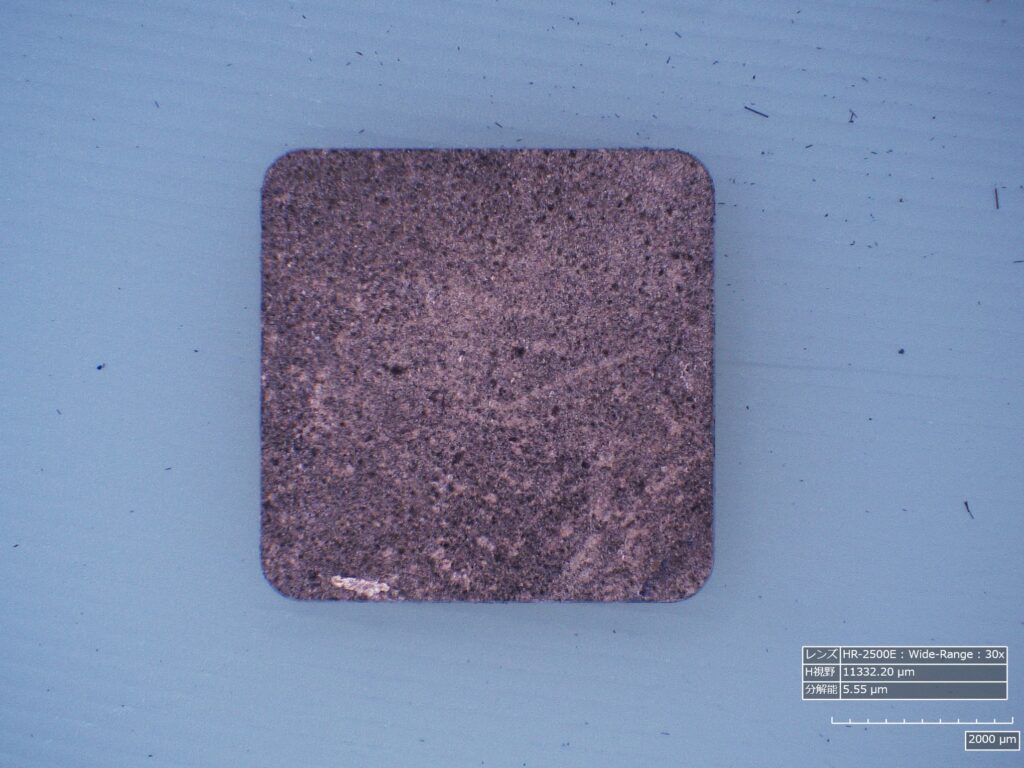
All-solid-state battery processed with the C technique jig (Photo showing the anode Cu foil Surface)
Specifications
| Overall dimensions (in mm) | W152×D210×H225 |
| Weight | Approximately 8 kg |
| Blade material options | Cemented carbide with a special surface coating Ceramic (for short-circuit prevention) |
| Main body material | Stainless steel High-strength aluminum alloy |
| Processing dimensions | 5.00 mm × 5.00 mm (Custom dimensions up to 20.00 mm × 20.00 mm are available.) |
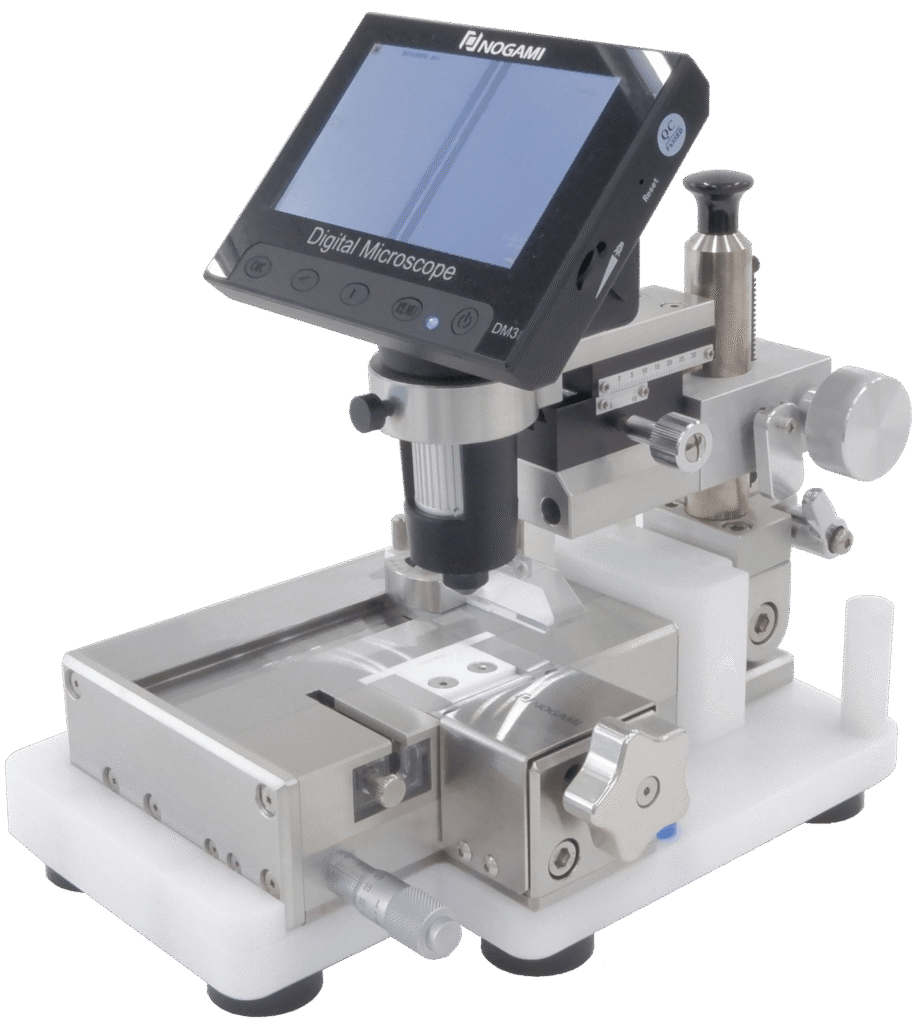
Cut surface finishing jig for cross- sectional observation samples
―S technique jig―
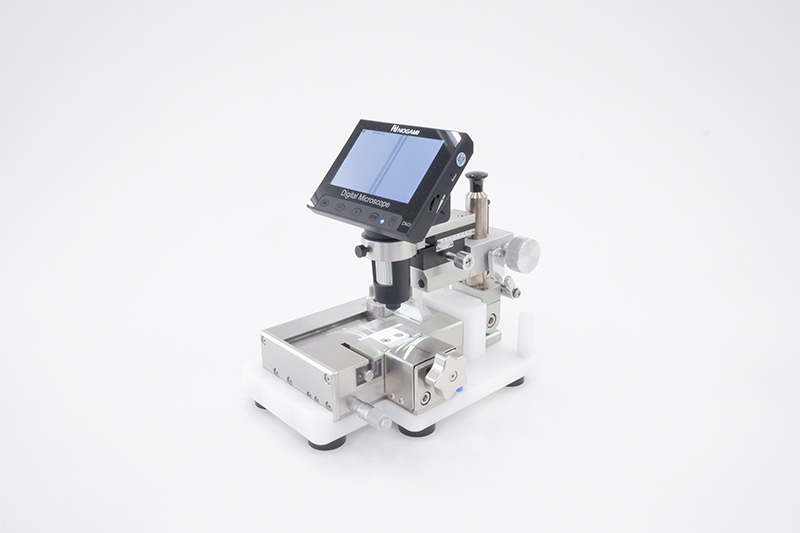
This tool is designed to create ultra-smooth cross sections on sample observation surfaces for advanced material characterization and analysis, including Scanning Electron Microscopy (SEM). It delivers smooth cross sections free from metal-foil smearing and interlayer delamination, dramatically reducing ion milling processing time. By eliminating damage caused during sample preparation, it enables highly reliable observation and evaluation.
Key features of the S technique jig
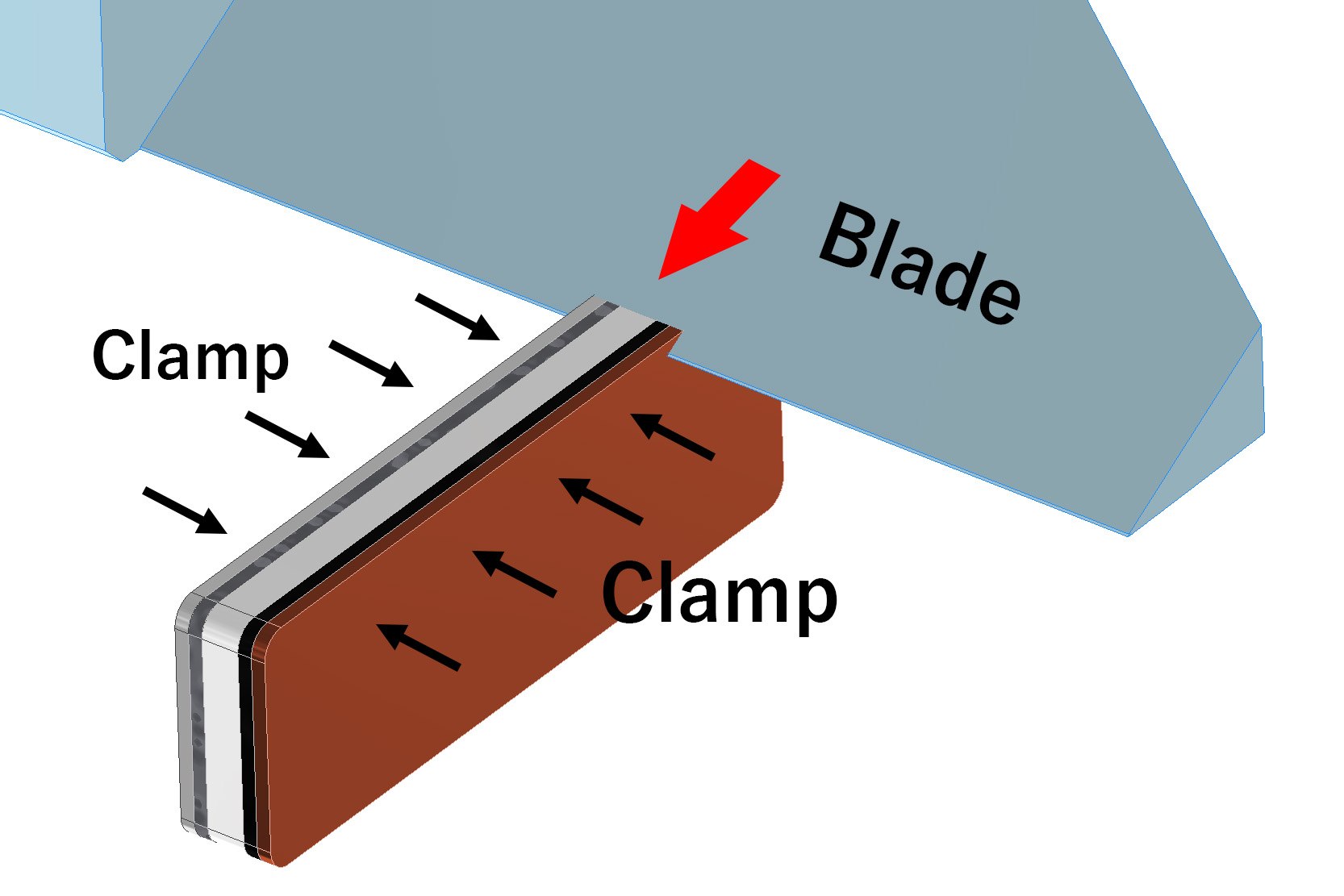
Proprietary processing technology that minimizes material damage
Using a proprietary processing method, this technology suppresses interlayer delamination and metal-foil smearing within the sample, resulting in smooth, high-quality cross sections.
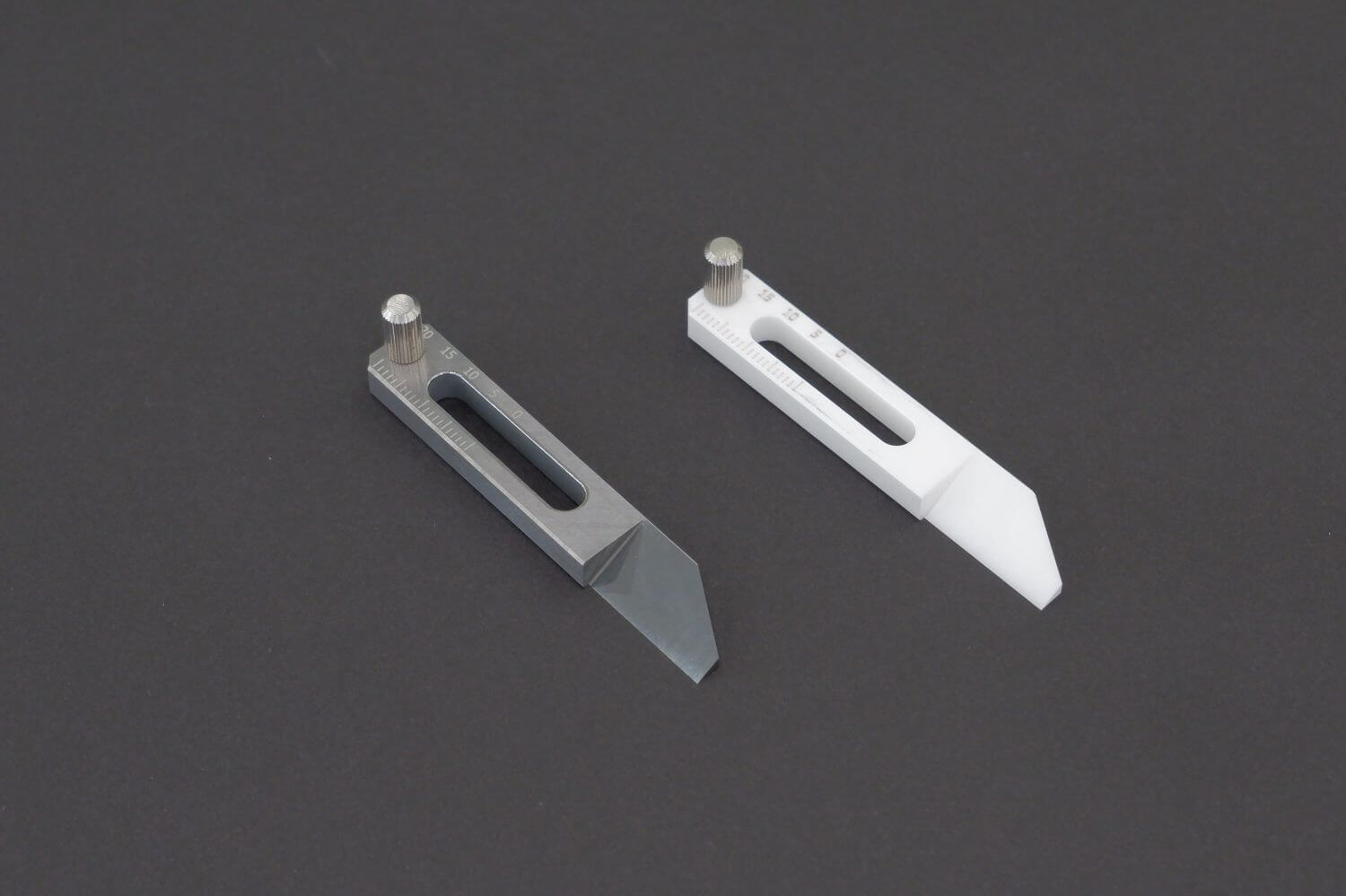
Choice of blade materials to suit your application
The blades are available in either high-rigidity cemented carbide or ceramic. The ceramic option helps prevent short circuits, making it ideal for use with charged batteries.
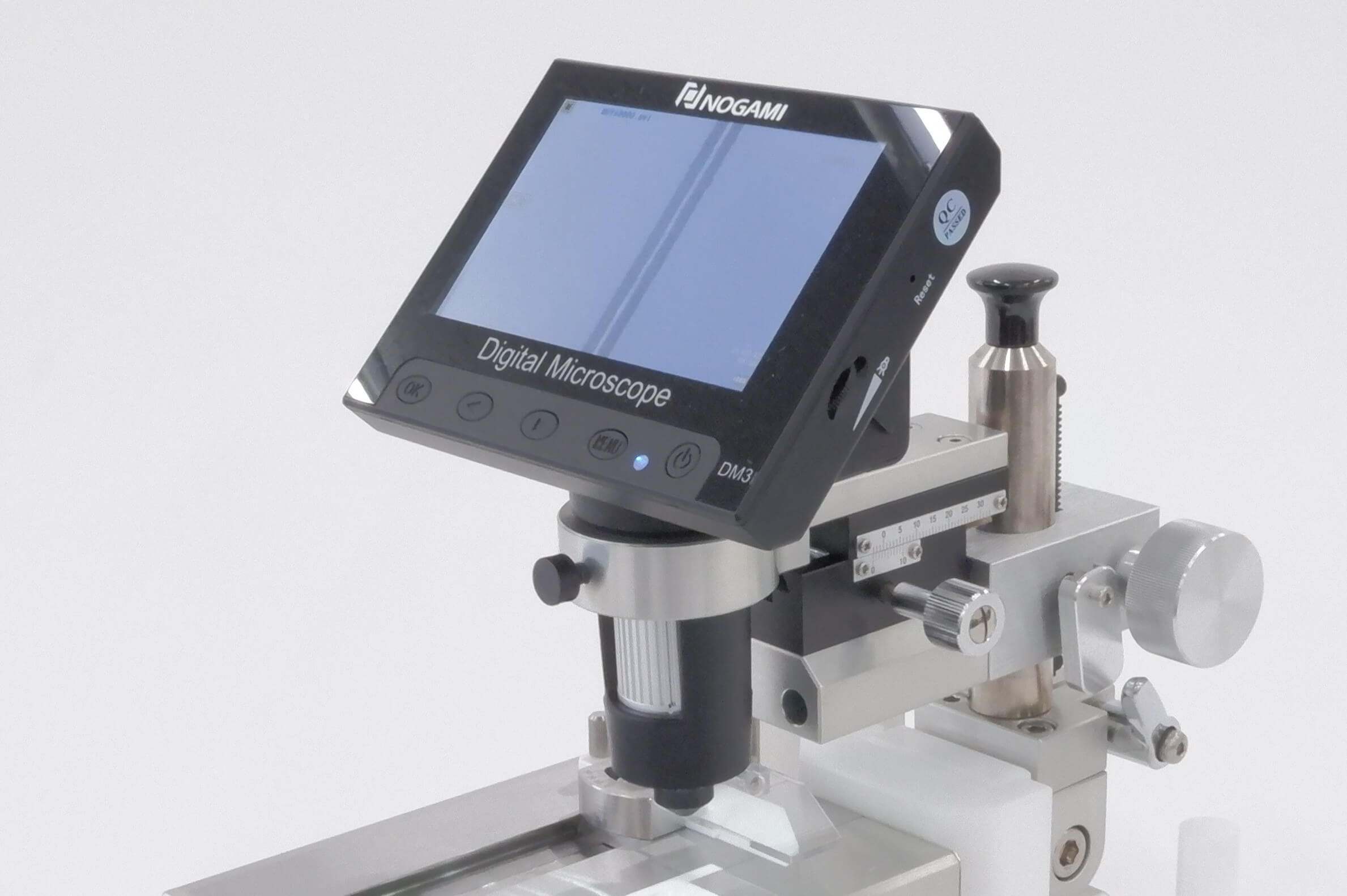
Equipped with a microscope for inspecting the cross-sectional finish
The magnified view of the processed cross section allows you to inspect its condition in detail, enabling you to monitor the quality of the finish at every step of the process.
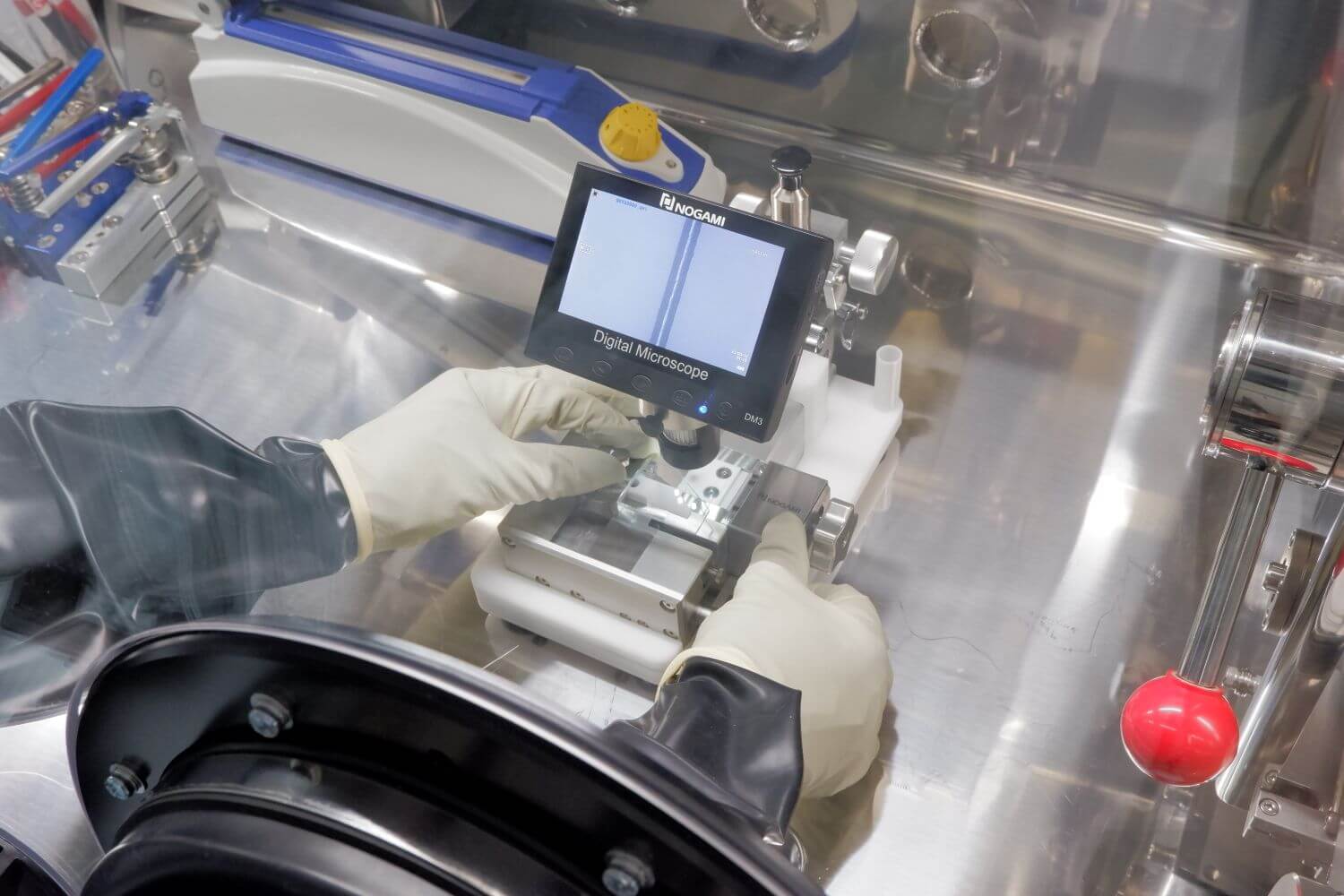
Safe to use inside a glove box with excellent operability
The entire workflow, from sample setup through processing to sample retrieval, can be completed easily and reliably within the glove box.
Application examples
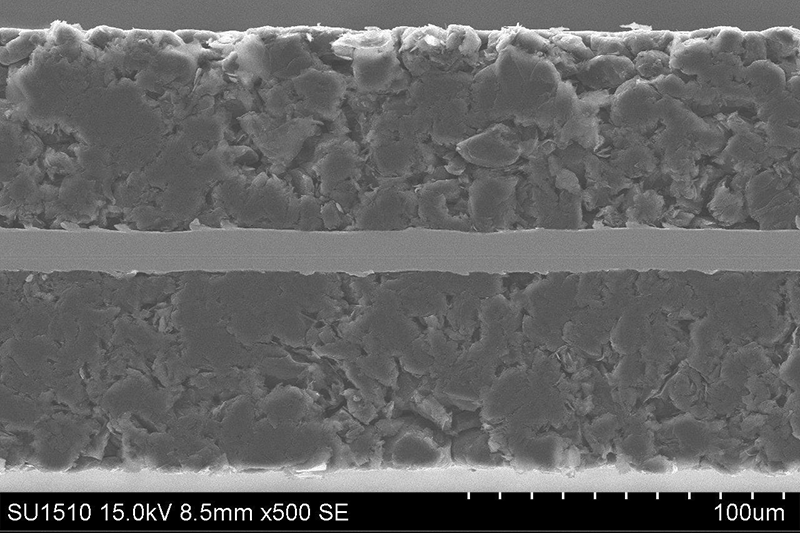
Cross section of a ‘liquid’ Lithium-Ion Battery anode electrode (SEM Image) Cross section of an all-solid-state battery (Microscope Image) 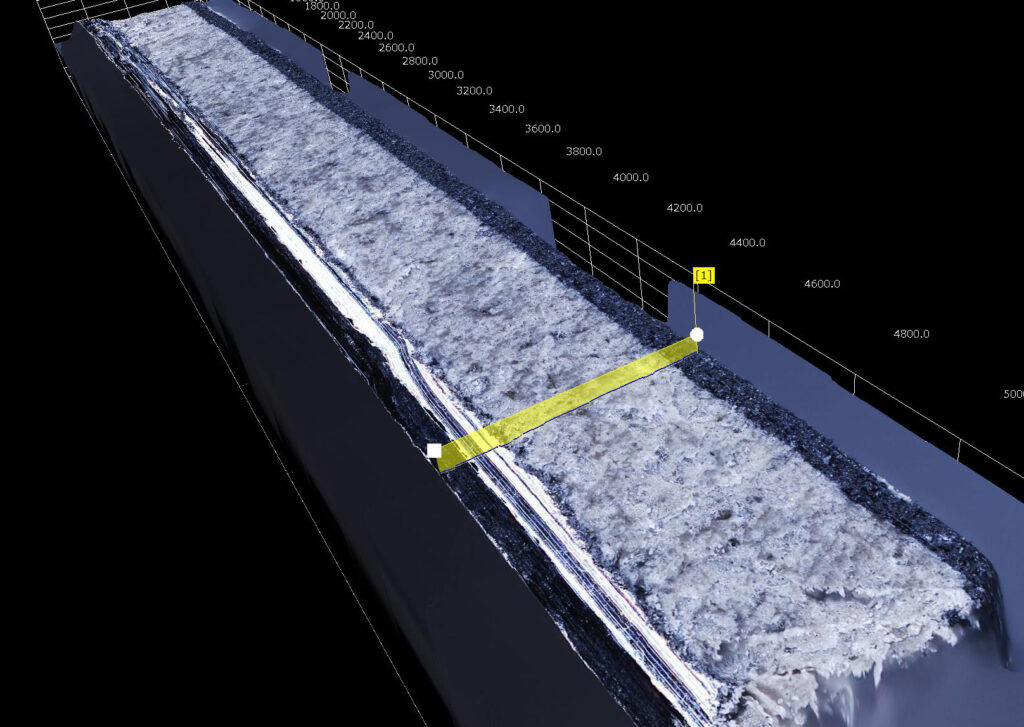
Measurement of surface height variation in the cross section of an all-solid-state battery (Minimum value: 4.2 μm)
Specifications
| Overall dimensions (in mm) | W181×D242×H230 |
| Weight | Approximately 5.5 kg |
| Blade material options | Cemented carbide with a special surface coating Ceramic (for short-circuit prevention) |
| Main body material | Stainless steel High-strength aluminum alloy |
| Microscope | Power source: 3.7 V DC, USB power supply Magnification: Approximately 1x to 70x (manual) Resolution: VGA 640 × 480, 1M 1280 × 720, 2M 1920 × 1080 Interface: Micro USB 2.0 Display : 4.3 inches Focal length: 10 mm to 40 mm Language display: Japanese, English, Chinese, French, German, Korean, Italian, Russian, Spanish |
| Processable sample dimensions | Maximum thickness: 3 mm Maximum width: 25 mm Depth: 2.5 mm to 10 mm |
Material Processing Test
We offer a free Material Processing Test, including a standard test report.
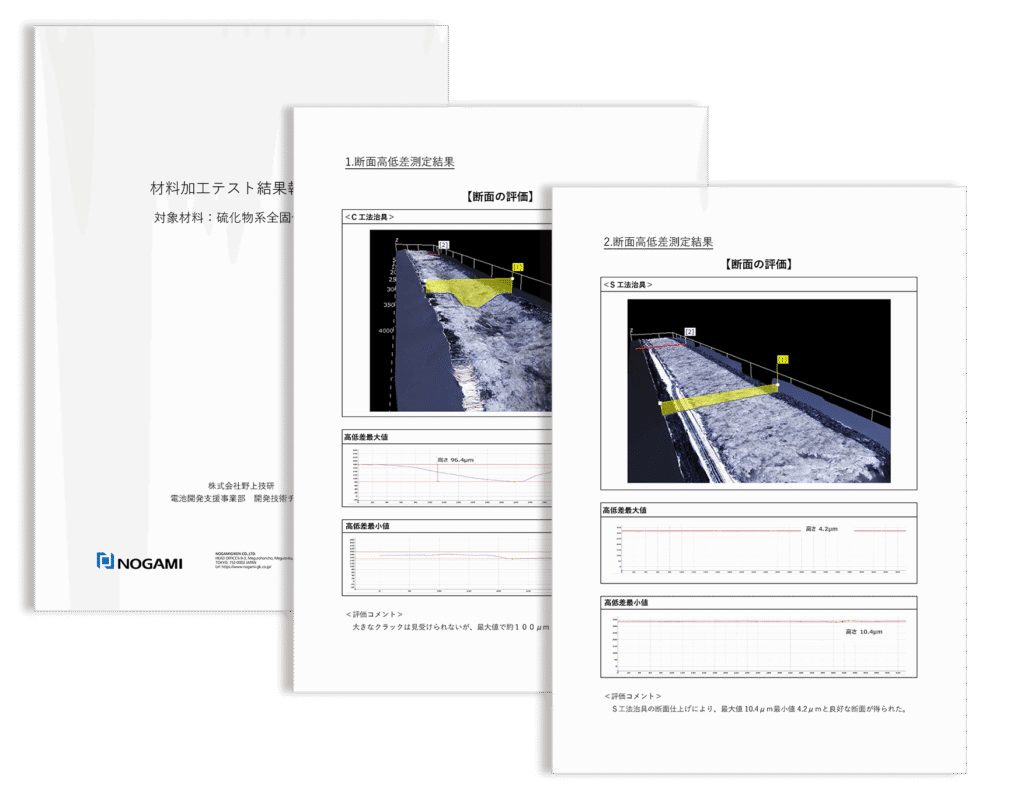
Examples of observation and analysis equipment available at Nogamigiken
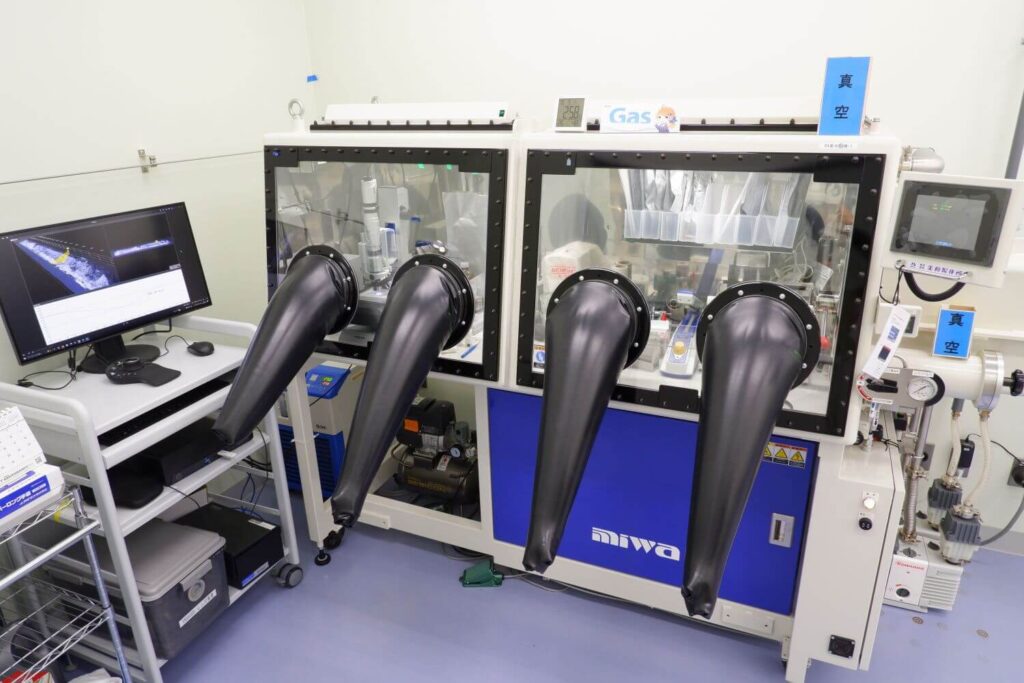
Miwa Manufacturing glove box inside which cross-sectional observation and measurement of surface height variations can be performed. 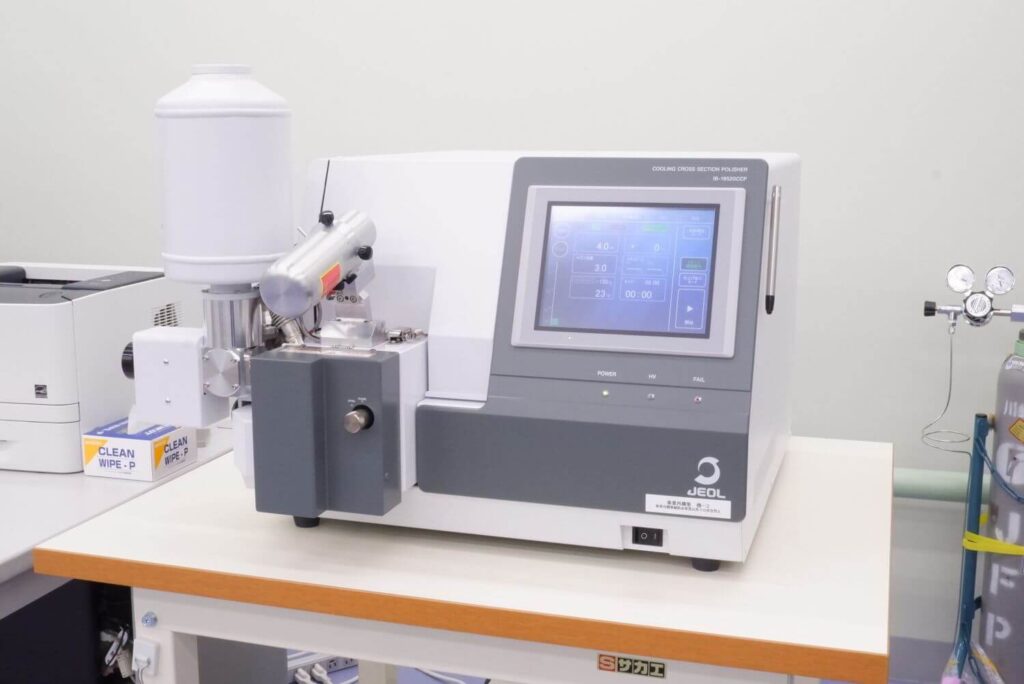
JEOL Cooling cross section polisher (CP) 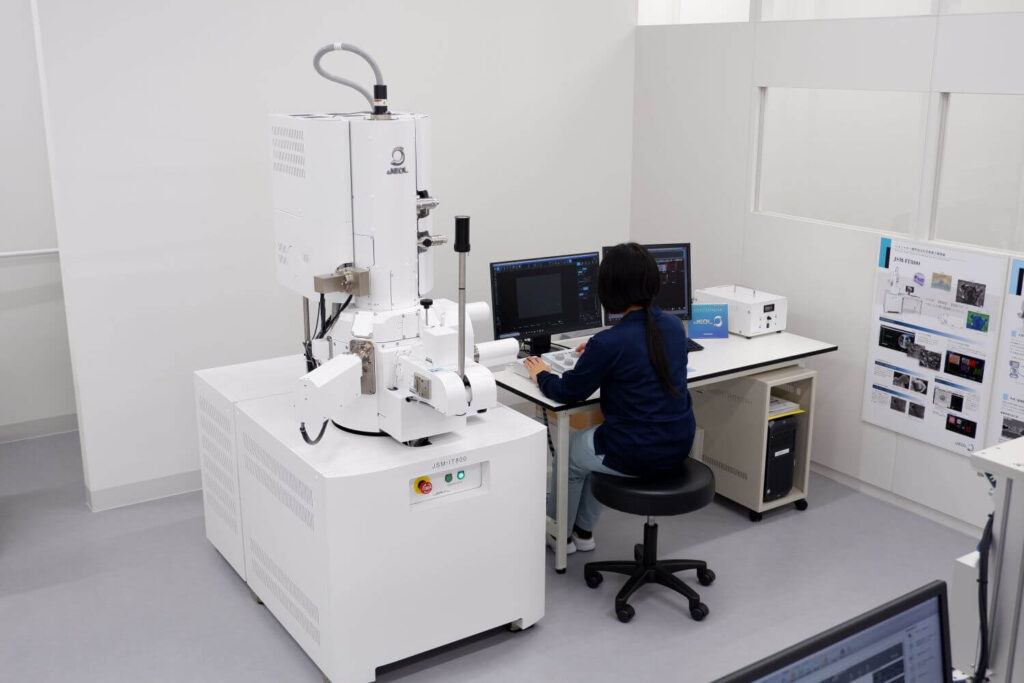
JEOL Schottky field emission scanning electron microscope (FE‑SEM)
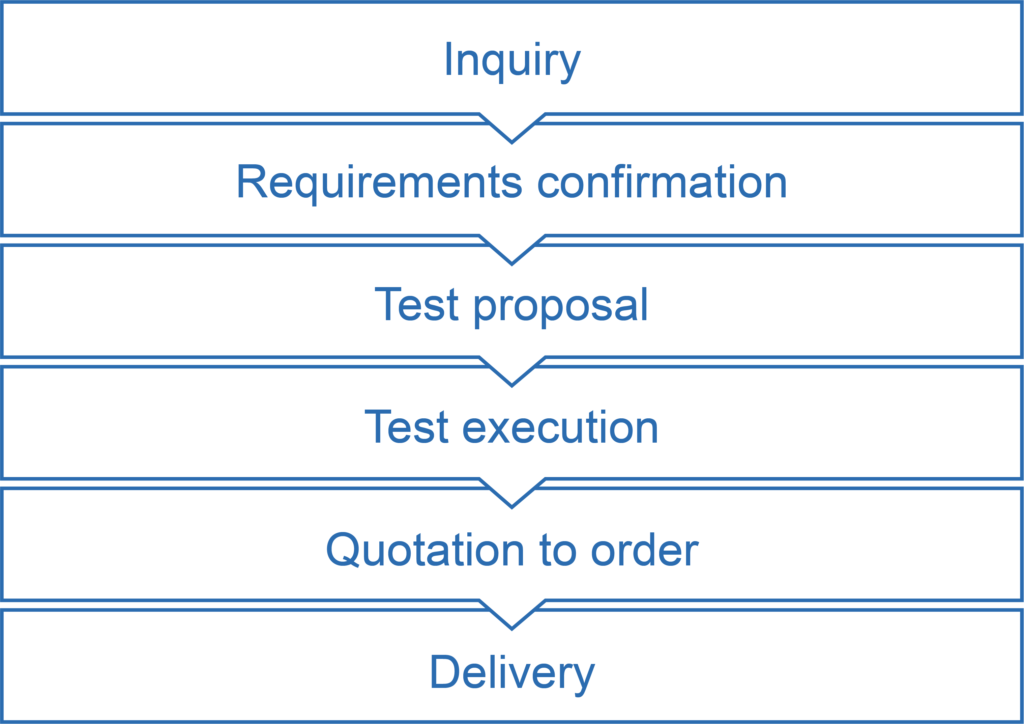
From inquiry to delivery
FAQ
INQUIRY FORM